In-home senior care agencies play a vital role in helping older adults age safely and comfortably in their own homes. However, behind the scenes, many agencies struggle with billing complexities that threaten profitability and long-term viability.
From fluctuating payer rules to recurring service documentation, in-home care billing requires a thoughtful, structured approach to revenue cycle management.
Understanding the In-Home Care Billing Landscape
In-home care agencies often operate under a hybrid revenue model that includes Medicare, Medicaid waiver programs, long-term care insurance, and private-pay clients. Each payer comes with distinct billing rules, documentation standards, and reimbursement timelines.
This complexity increases administrative burden and leaves agencies vulnerable to revenue leakage if workflows are not tightly managed.
The Role of Eligibility in Revenue Protection
Eligibility verification is especially critical in in-home care because coverage can change frequently. Medicaid waivers may lapse, Medicare Advantage plans may modify benefits, and private insurance coverage may impose visit limits.
Failing to verify eligibility before each service cycle exposes agencies to non-payment risk—even when care has already been delivered.
Best Practice: Implement eligibility verification at intake and at regular intervals for ongoing patients. Clear communication with families about coverage limitations also reduces disputes and improves collections.
Documentation That Supports Medical Necessity
In-home care claims must clearly demonstrate why services are required and how they align with patient care plans. Generic or repetitive notes often trigger denials, especially for skilled services.
Payers expect documentation to reflect patient-specific needs, functional limitations, and progress—or decline—over time.
Best Practice: Train caregivers and clinicians to document with reimbursement in mind. Structured templates and periodic documentation audits help maintain consistency and compliance.
Managing Authorizations and Visit Limits
Authorization requirements vary widely across payers and states. Missed authorizations or exceeded visit limits are among the top reasons for denied in-home care claims.
Agencies juggling high patient volumes often struggle to track these requirements manually.
Best Practice: Use centralized authorization tracking systems with reminders for renewals and visit caps. Assign clear ownership for authorization management to avoid costly oversights.
Improving Cash Flow Through AR Optimization
Delayed payments are common in in-home care billing, particularly with Medicaid and Medicare Advantage plans. Without consistent follow-up, underpaid or unpaid claims can remain unresolved indefinitely.
Strong AR management is essential for maintaining operational liquidity.
Best Practice: Segment AR by payer and aging bucket, and prioritize follow-ups accordingly. Experienced billing teams understand payer-specific escalation paths and documentation requirements, reducing turnaround times.
Reducing Administrative Burnout
In-home care agencies often operate with lean administrative teams. When staff are overwhelmed by billing tasks, errors increase and morale declines.
Outsourcing or partnering for RCM support allows agencies to focus on care delivery while ensuring billing accuracy and compliance.
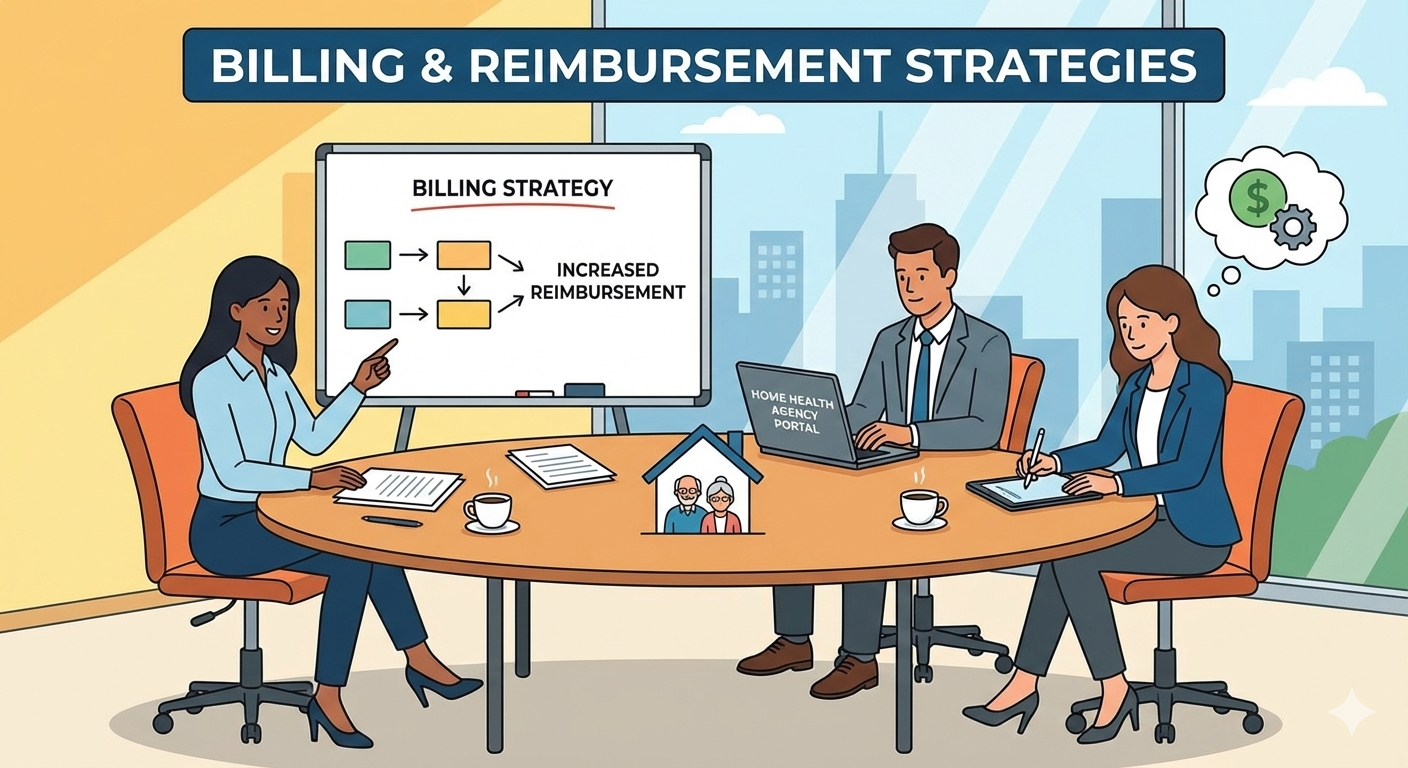
Aligning Billing Strategy With Growth
As agencies expand into new markets or increase service offerings, billing complexity grows. Scalable RCM infrastructure ensures growth does not come at the expense of financial stability.
Final Thought
In-home senior care agencies deserve billing strategies designed for continuity of care, recurring services, and complex payer environments. With the right RCM approach, agencies can protect revenue, reduce stress, and focus on what matters most—caring for seniors with dignity and compassion.